What Wildlife Can You See in Ketchikan Alaska
Most cruise passengers arrive in Ketchikan expecting to see "some Alaska wildlife." They leave realizing they walked into one of the densest concentrations of marine and rainforest life on the continent.
The Tongass — the largest temperate rainforest on Earth — wraps the entire region. The Inside Passage funnels marine traffic, baitfish, and whales right past town. Salmon streams cut through the city itself. The result is a place where, on a typical day, you might see more wildlife in a few hours than you'd see in a week somewhere else.
This is what's actually out there.
Marine Wildlife
Whales
Humpback whales are the headliner. Adults run 40–50 feet, weigh up to 40 tons, and migrate up the Pacific coast each spring to feed in Southeast Alaska through the summer and early fall. They're known for their behaviors — fluking dives, occasional breaches, sometimes cooperative bubble-net feeding — and they're commonly sighted on Ketchikan ocean tours from May through September. Peak activity tends to fall mid-July through August when the salmon runs are strongest.
Orcas show up less predictably but more memorably. Pacific Northwest orcas come in resident pods (which eat fish) and transient pods (which eat marine mammals). Both pass through these waters. When orcas appear, they tend to travel and surface in coordinated patterns that draw every camera on the boat at once.
Other cetaceans include Dall's porpoises, which are black-and-white and often mistaken for small orcas, and harbor porpoises, which are smaller and shyer.
Seals and Sea Lions
Harbor seals are common throughout the channels. You'll often see them hauled out on rocks, peeking up from the water beside the boat, or lounging on harbor buoys. They're curious, generally calm, and seem completely unbothered by passing vessels.
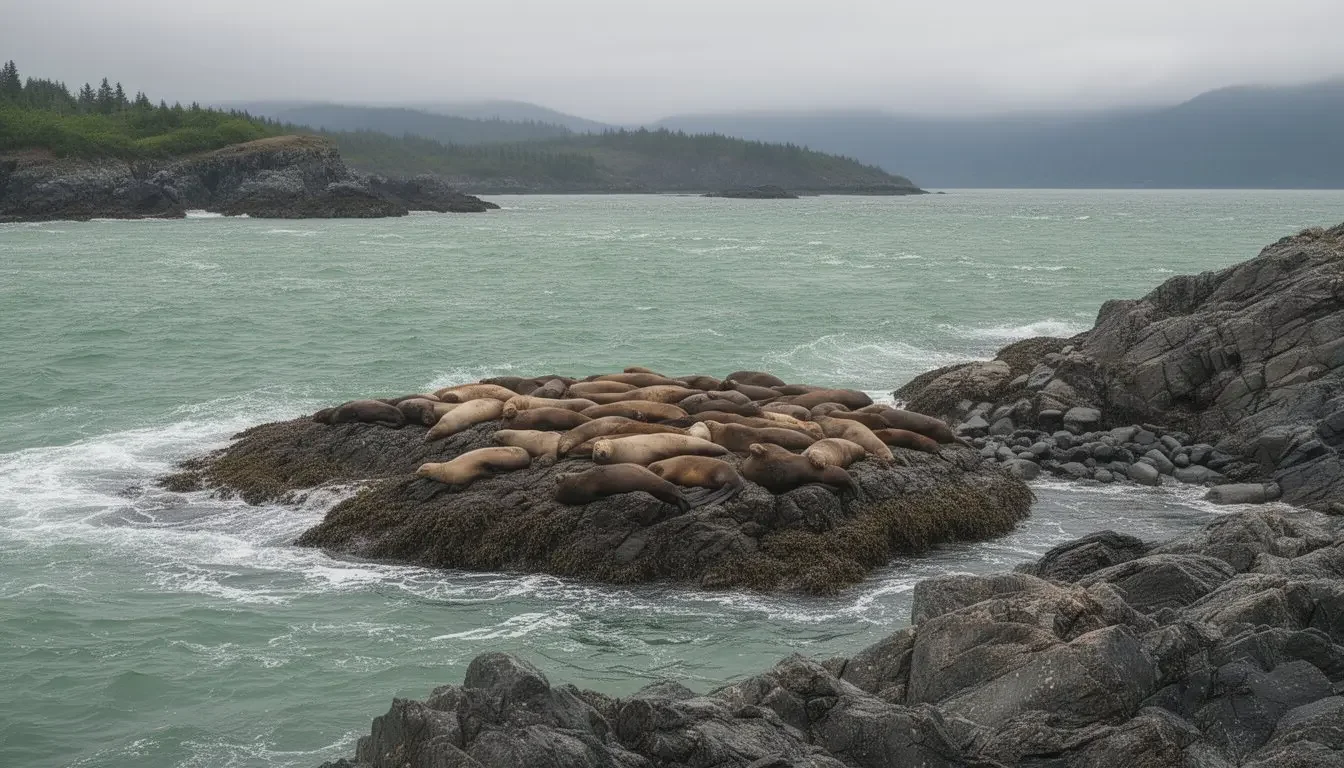
Steller sea lions are the bigger, louder cousins. Bulls can top 1,500 pounds. They tend to congregate at known haul-out spots in noisy, smelly piles that you'll smell before you see. Watching a sea lion pile in operation is its own kind of entertainment — territorial barking, posturing, the occasional shoving match.
Both species are present throughout the cruise season and reliably sighted on most ocean tours.
Birdlife
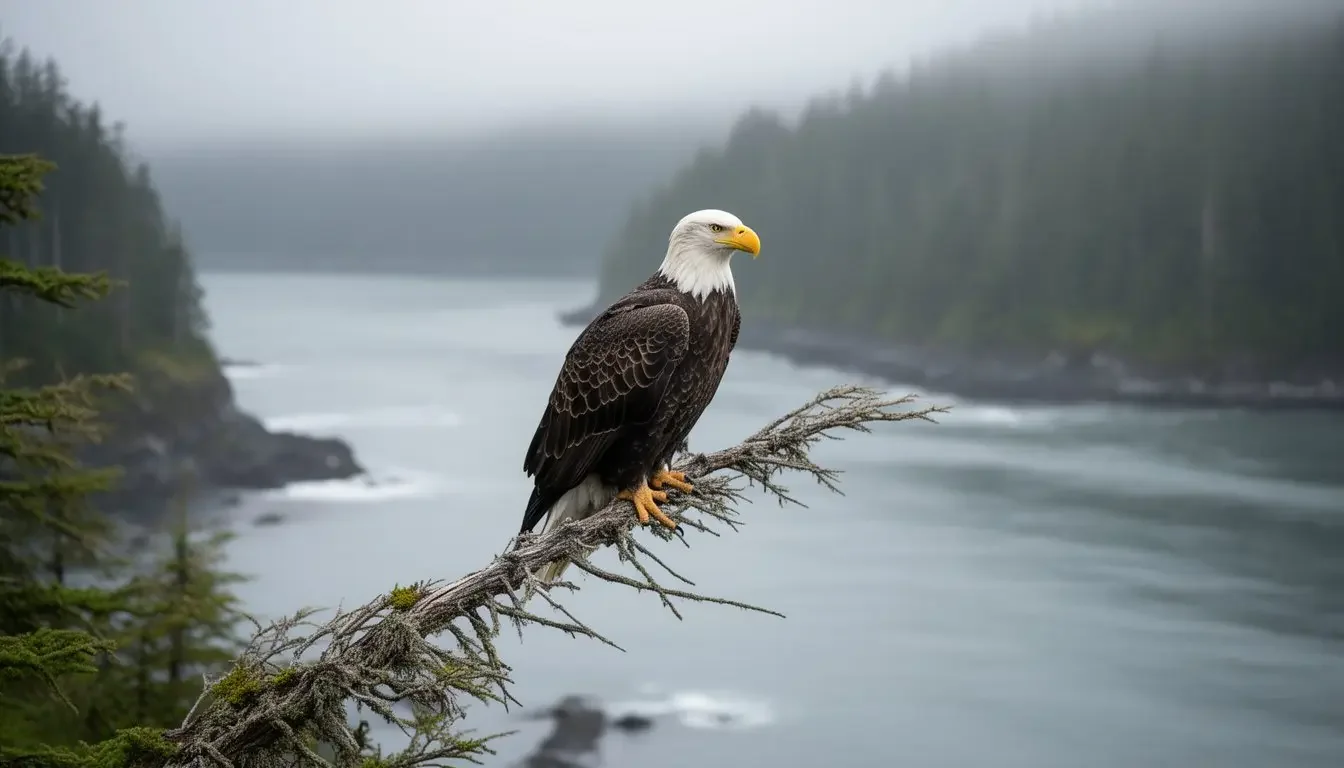
Bald Eagles
You'll see more bald eagles in your first hour in Ketchikan than most people see in their entire lives.
The combination of dense salmon runs, mature spruce forest, and protected coastline makes this one of the best eagle habitats in North America. They perch on shoreline snags, ride thermals over the channels, dive for salmon in plain view, and occasionally squabble with each other over fish or territory. First-time visitors are usually surprised within the first half-hour of any ocean tour.
Eagles are present year-round, but cruise season visitors will see them in particularly high numbers because of the salmon activity.
Seabirds
Past eagles, the bird life is genuinely interesting if you know what you're looking at.
Marbled murrelets nest in old-growth Tongass spruce and feed in the channels. Pigeon guillemots are striking in their summer plumage. Common murres, cormorants, mergansers, kingfishers, and great blue herons all show up regularly. Late summer brings Bonaparte's gulls in concentrated flocks where bait is balling up.
If you bring binoculars, the bird side of a Ketchikan ocean tour will reward the effort more than you expect.
Land Wildlife
Bears (Seasonal)
Ketchikan is bear country, but bear viewing is seasonal and location-specific.
Black bears are the species you're most likely to see. They're active along the salmon streams from roughly mid-July through September, fattening up on returning salmon before winter. You can sometimes spot them from the water on ocean tours, working the shoreline near stream mouths.
For dedicated bear viewing, places like Neets Bay and Margaret Bay (accessible by floatplane or longer boat trip) are well known for reliable sightings. Those are full-day excursions and a different format from a standard ocean tour.
Brown bears are present in the broader region but rarely seen near Ketchikan town. They're more associated with island ecosystems further north.
Deer
Sitka black-tailed deer are common in the Tongass. They're smaller than their mainland cousins, well-adapted to dense forest, and occasionally visible on shoreline edges from the water. You may also spot them on hiking trails near town if you head into the woods.
Best Ways to See Wildlife
Different formats put you in front of different species.
Ocean tours are the highest-yield option for cruise passengers. In a few hours on the water, you can reasonably expect eagles, seals, sea lions, and porpoises, with strong odds of whales depending on the season. Our Alaska Ocean Tour covers the full marine wildlife range; our whale watching tour hunts cetaceans specifically.
Land tours and walking trails are better for forest ecology, deer, and the occasional bear at salmon streams. Creek Street and Ketchikan Creek run salmon right through downtown — you can watch them spawn from the boardwalk in late summer without leaving the city.
Floatplane and remote bay trips are the format for dedicated bear viewing. Longer, more expensive, weather-dependent, and worth it if bears are your priority.
Best Time to See Wildlife
The full picture, by season:
May–early June: Eagles abundant, seals and sea lions present, early humpbacks arriving, salmon not yet running, bears not yet at streams.
Late June–July: Whale activity climbing, salmon starting to run, eagles peak, bears beginning to appear at stream mouths.
August: Often considered the strongest overall window. Whales feeding heavily, all five salmon species running, bears active, eagles everywhere, weather generally cooperative.
September: Whales still active, salmon still running, bears in heavy feeding mode, fewer ships in port, light at its photographic best.
Experience Wildlife on Our Ocean Tour
If you want a single trip that gives you the broadest cross-section of Ketchikan wildlife in a cruise-friendly window, an ocean tour is the format.
Our Alaska Ocean Tour runs in small groups, covers the channels and shorelines where wildlife concentrates, and returns with margin against your sailing time. Captains know the spots, watch the conditions, and put you in the best position to see what's actually out there on your day.
No promises on specific sightings — wildlife runs on its own schedule. What we can promise is that we'll work the right water and tell you straight what's been active in the days leading up to your trip.