What to Expect on a Ketchikan Ocean Tour
Booking an ocean tour in a place you've never been is a small leap of faith. You're handing a few hours of your one day in Alaska to people you've never met, on a boat you've never seen, in waters that look enormous on the map.
This guide walks through exactly what a Ketchikan ocean tour looks like from the moment you step off your ship until you're back at the dock. No mystery, no surprises. Just what actually happens.
Arrival and Check-In
Ketchikan's port is right downtown. That's one of the things passengers consistently appreciate — you don't lose an hour on a shuttle before the tour even starts.
Most ocean tour meeting points are a 5–15 minute walk from the cruise berths. We send confirmation emails before your sailing with the exact dock location, walking directions, and a map. If your ship docks at one of the further piers, allow a few extra minutes.
Check-in is usually a quick stop at the dock — a brief sign-in, a chance to grab water or a coffee, a friendly face pointing you toward the boat. We ask passengers to arrive about 15 minutes before departure. That's plenty of margin without making you stand around.
Boarding the Boat
Boats vary by operator, but the format is generally similar. You'll step from the dock onto a covered vessel — comfortable seating inside, open deck space outside for photos and viewing.
The captain does a short safety briefing once everyone's aboard. Where the life jackets are, where the bathroom is, what to do if you need to move around. It takes about three minutes.
Group sizes vary. We keep ours small on purpose — typically a dozen or fewer guests — because crowded boats make for compromised wildlife viewing. Everyone should have a seat with a view and clear access to the open deck when something surfaces.
The Journey Through Alaska Waters
The first ten minutes out of the harbor tell you a lot about what you signed up for.
Ketchikan sits on the Tongass Narrows, with forested islands rising on either side and channels that thread between them in every direction. Floatplanes lift off and land in the harbor. Working fishing boats head out to their grounds. The town itself shrinks behind you, small and colorful against the green hills.
Most of Ketchikan's tour waters are protected — channels and inside passages rather than open ocean — which means motion is generally moderate. There are days the water gets choppy, especially in shoulder season or with weather moving through, but glassy stretches are common in summer.
Captains adjust route based on conditions and what's been active that morning. Sometimes that's a run out toward the islands where humpbacks have been feeding. Sometimes it's a slower track along a shoreline where seals and eagles are working a salmon stream. The route isn't fixed — it's responsive to where the wildlife is on the day you're aboard.
Wildlife Sightings
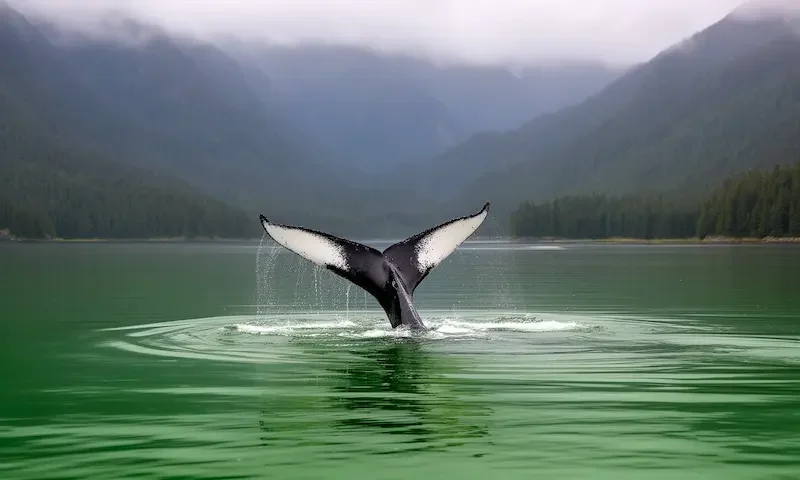
This is the part most passengers came for. A few honest words on what you can expect.
Bald eagles. Practically guaranteed. Ketchikan's eagle density is high enough that first-time visitors are usually surprised within the first half-hour. They perch on shoreline snags, ride thermals overhead, dive for salmon in plain view.
Harbor seals and Steller sea lions. Common. Often hauled out on rocks or buoys, sometimes shadowing the boat for a stretch. Sea lions in particular have personalities — vocal, curious, occasionally unbothered by an audience.
Humpback whales. Strong likelihood mid-summer through fall. Spouts, fluking dives, occasional breaches. Activity peaks roughly mid-July through September.
Orcas. Less predictable than humpbacks but spotted regularly through the season. Pods move through the channels on their own timeline.
Porpoises. Often appear alongside the boat, especially on transit between viewing areas. Smaller than dolphins, fast, and surprisingly playful.
Black bears. Sometimes visible on the shoreline working salmon streams in late summer.
Two things to keep in mind. First, wildlife isn't on a schedule. Some trips put you in front of a feeding humpback for fifteen minutes; some have you watching seals and eagles instead and never see a whale. Both are real Alaska days. Second, your captain will not crowd wildlife. Federal regulations require keeping respectful distances from marine mammals, and reputable operators stay well within them. Good viewing comes from positioning, not closeness.
Tour Duration and Timing
A typical Ketchikan ocean tour runs 2.5 to 3 hours from dock to dock. That includes a short transit out, the wildlife and scenery portion, and the run back.
For cruise passengers, this is usually the sweet spot. Long enough for genuine wildlife viewing. Short enough to leave you with margin in port for lunch, walking around downtown, or just decompressing before all-aboard.
Departures are timed against your ship's schedule. We aim to return passengers to the dock at least 60–90 minutes before your sailing time, so a delay on the water never threatens your return to the ship. If your itinerary is unusually short, mention it when you book and we'll find a departure that fits cleanly.
Weather and Conditions
Ketchikan averages over 150 inches of rain a year. That's worth knowing.
Locals don't cancel things because of rain — life here would stop entirely if they did. Tours run in light rain, mist, low cloud, and full overcast. Wildlife often is more active in those conditions, and the Tongass rainforest looks its best when it's wet.
Tours only cancel for genuinely unsafe conditions: heavy seas, strong winds, fog dense enough to be a navigation hazard. Those days are uncommon during cruise season but they happen, and operators handle them with refunds or rebooking. We'd rather cancel a trip than push into bad water.
Bring this gear:
Waterproof jacket. Non-negotiable. The rain shows up without warning.
Layers. Even in July, the wind on the channel is colder than you expect.
Closed-toe shoes with grip. Boat decks get slick.
Sunglasses. Glare off the water on clear days is no joke. Polarized if you have them.
Camera or phone with charged battery. You'll use it more than you think.
Tips to Maximize Your Experience
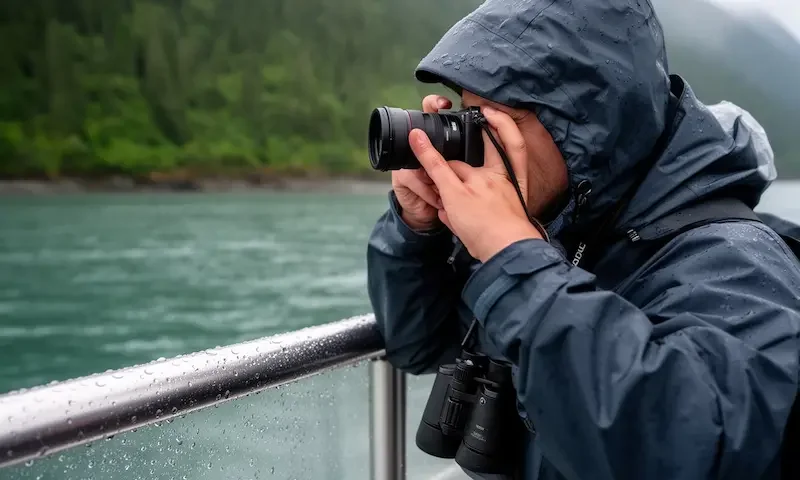
A few things that make a real difference.
Sit toward the front of the boat on the way out. Better forward views, smoother ride, first to spot wildlife coming up. Once you're at a viewing spot, the captain will let everyone move freely.
When wildlife appears, don't lead with your phone. See it with your eyes for a few seconds first. Then take the photo. The instinct to immediately reach for the camera means a lot of people watch their first humpback through a screen and remember the experience as a video clip rather than a moment.
Listen to the captain on positioning. "Whale at two o'clock, 100 yards" means you've got about three seconds to orient. Knowing your clock positions on the boat (bow is twelve, stern is six) saves you swinging the camera in the wrong direction.
Use burst mode on a phone or fast shutter on a real camera. Whales surface and dive quickly. A single tap usually misses the moment. Three or four shots in quick succession get the one you want.
Talk to the captain. They've been running these waters for years and know stories about every channel, island, and shoreline. Ask questions. The narration is good; the conversations are often better.
Bring layers you can shed. Sunny breaks happen, even in rainforest weather. A pack to stuff a jacket into is more useful than you'd expect.
Book Your Ocean Tour
If a small-group, cruise-friendly Ketchikan ocean tour sounds like the right fit for your day in port, the Alaska Ocean Tour is built around exactly that — wildlife focus, local captains, and a return time that respects your sailing schedule.
Send your ship's name and arrival date when you reach out. We'll match you to a departure that fits cleanly into your time in port.