Top Things to Do in Ketchikan Alaska
Ketchikan is small. You can walk most of it. But pack a day here and you'll wonder how a town this size fit so much in.
Wooden boardwalks built straight over the water. Salmon running through the middle of downtown. Totem poles older than the state itself. Floatplanes lifting off the harbor every few minutes, and whales working the channels just past the breakwater.
The rain comes and goes. The forest starts where the streets end. And almost everything worth doing is either a short walk from the cruise dock or a quick ride out of town.
Here's the honest rundown — everything we'd point a friend toward, whether we run the tour or not.
A Quick Lay of the Land
Most of Ketchikan hugs a narrow strip between the water and the mountains. The cruise docks sit right downtown, which means you can step off the ship and be on a boardwalk in about ten minutes.
The best wildlife is on the water. The best views are from the air. The best history is on foot. And the deepest culture sits in the totem parks just outside of town.
You won't do all of it in one port day. But you can do more than you'd think.
On the Water
This is the part most cruise passengers regret skipping. The town is fun, but the water is where Ketchikan really shows off.
Ocean and wildlife tours. The highest-yield way to spend a few hours here. You're out in protected channels looking for whales, eagles, seals, and sea lions, with a captain who knows where they tend to gather and narrates as you go. Small groups read the water better than big boats, and the timing is built around cruise schedules. Our Alaska Ocean Tour lives in this category.
Whale watching. Mid-July through September is peak humpback season, with orcas turning up regularly throughout. There's a rhythm to it — the salmon come in, the whales follow — and a good guide can read that rhythm. If you're trying to time your trip around it, our guide to the best time for whale watching in Ketchikan breaks down the months.
Sea kayaking. Quieter, closer to the surface, and a different kind of memory. You paddle the shoreline of places like Clover Pass or Orca Cove, eagles overhead, the forest dropping right down to the waterline. Most cruise-timed trips run three to four hours with shuttle and gear included.
Zodiac and fast-boat tours. For folks who want a little more speed and spray. These rigid-hull inflatables zip out to wildlife coves and back, and they're a favorite with travelers who'd rather be moving than sitting.
Snorkeling. Yes, really. Alaska snorkeling is a thing, and it surprises people. You suit up in a thick wetsuit and drop into the cold water near Mountain Point to look at sea stars, urchins, sea cucumbers, and the occasional curious crab. Singular experience. Bring your sense of humor.
The duck tour. An amphibious vehicle that rolls through downtown, then drives straight into the harbor and keeps going. Ninety minutes, family-friendly, equal parts history lesson and goofy fun. Easy bookend to a busier day.
Salmon Fishing
Ketchikan calls itself the Salmon Capital of the World, and the title is earned. Five species of Pacific salmon run through these waters every summer, with halibut, rockfish, and lingcod alongside.
A charter is a bigger time commitment than a wildlife tour, but for anyone who fishes, it's the whole reason to come. Guides know which streams and holes are producing, and most will help get your catch processed and shipped home so you're eating Alaska salmon long after the trip ends.
Details are on our Ketchikan fishing charter page.
Into the Rainforest
The Tongass National Forest starts where the town ends. It's the largest temperate rainforest on the planet, and you don't have to go far to feel it.
Hiking. Deer Mountain is the local classic — a steep climb with serious payoff views over town and the channel. Rainbird Trail is shorter and gentler, mostly forested, with good odds of spotting wildlife. And Married Man's Trail climbs into the woods right next to Creek Street, on what was historically a back route used to reach the boardwalk's red-light past discreetly. Most visitors walk right past the bottom of it without knowing the story. If you'd rather have a guide and some trail context, see our hiking tours.
Ziplining. A genuine favorite. You fly through the rainforest canopy on a series of lines and bridges, with the moss and spruce blurring below. Good for families and first-timers — guides handle all the gear and instruction.
ATV, UTV, and off-road tours. Karts, side-by-sides, and Jeeps that take you up the back roads into the forest and along Behm Canal. A heads-up worth knowing: some of these are more scenic-drive than white-knuckle adventure, so check the description if you're hoping for real terrain.
Above It All: Misty Fjords
Misty Fjords National Monument is one of the most dramatic landscapes in North America — sheer granite walls, waterfalls dropping straight into the sea, sea cliffs draped in cloud.
Most visitors only ever see it from the air, on a floatplane flightseeing trip that lands on a hidden lake mid-tour. It's weather-dependent and on the higher end of pricing. But when the skies cooperate, people talk about it for years.
You can also reach Misty by boat if you'd rather stay at sea level — a longer day, but a quieter, closer look.
Getting Close to the Wildlife
Ketchikan's wildlife concentration is real, and you don't have to work hard to find it.
Bear viewing. Seasonal — mid-July through September, when the salmon are running. Herring Cove and Neets Bay are the go-to spots, with viewing platforms set above the creeks where black bears come to fish. Neets Bay is a longer, pricier floatplane day, but the odds are excellent. You may also spot a bear from the water on an ocean tour if you're lucky.
Eagles. Largely unavoidable, in the best way. You'll see them from the dock, from every boat, perched in the harbor spruce. Bald eagles here sit close enough to photograph with a basic zoom or even good binoculars.
The Alaska Rainforest Sanctuary. A 40-acre reserve where a guided walk takes you past eagles, black bears, and old-growth trees, often paired with a stop to see rehabilitated birds of prey up close. A gentler, more controlled way to see wildlife than heading into the backcountry.
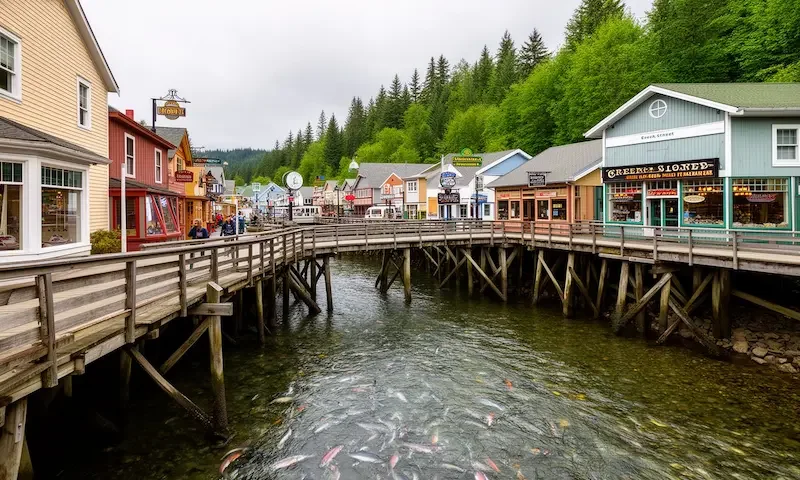
Salmon viewing. Free, easy, and right downtown. Between mid-July and September, stand on the Creek Street boardwalk and watch salmon spawning in the water directly beneath your feet. That alone is worth the walk.
Walking the Town
You can see a lot of Ketchikan on foot in an hour or two, and it costs almost nothing.
Creek Street. The historic boardwalk built on pilings over Ketchikan Creek. Once the rough side of town — a frontier red-light district through the early 1900s — it's now a string of small shops, galleries, and restaurants in restored buildings. Colorful, photogenic, and full of stories.
Dolly's House Museum. A preserved former brothel right on Creek Street, run by a madame named Dolly who set up shop here in 1919. Quick visit, surprisingly good local history, and a window into the boardwalk's wilder era.
Southeast Alaska Discovery Center. One block from the docks. A free-to-browse gateway to the Tongass, with strong exhibits on the region's ecology and Native cultures. A smart first stop if you want context before heading out.
Tongass Historical Museum. Small, downtown, and well done — Ketchikan's mining, fishing, and frontier past in one easy walk-through.
The Great Alaskan Lumberjack Show. Right next to the cruise terminal. An hour of axe-throwing, log-rolling, and crosscut sawing between two competing teams, with a side of timber-industry history. A little cheesy, genuinely fun, and a hit with kids.
Totems and Native Culture
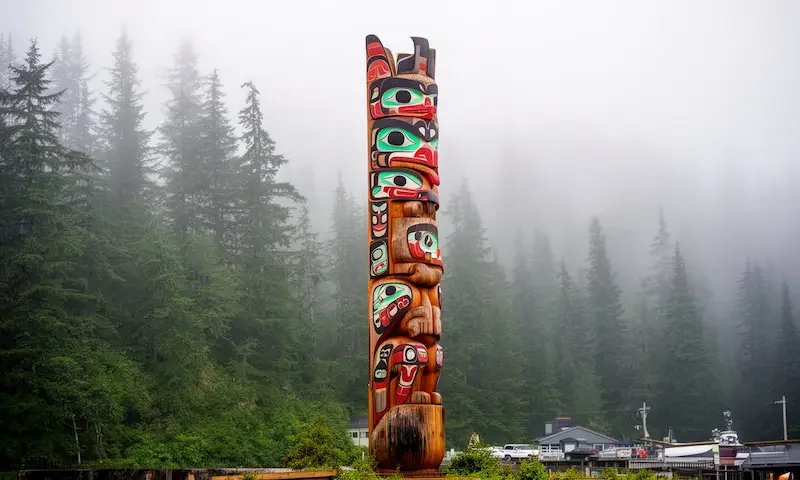
Ketchikan holds the largest collection of authentic totem poles in Southeast Alaska. If you do one cultural thing, make it a totem stop.
Totem Heritage Center. A short walk from downtown, holding one of the largest collections of original 19th-century poles anywhere — retrieved from abandoned Tlingit and Haida village sites. These aren't replicas. They're the real ancestral works, with the interpretive context to match.
Saxman Totem Park. A short drive south. A working Tlingit village with a clan house, an active carving shed, and an outdoor totem display. Cultural performances run during cruise season.
Totem Bight State Park. North of town. Restored poles and a traditional clan house set in a beautiful stretch of coastal forest, with an easy loop trail down to the water.
Potlatch Park. Near Totem Bight, with cedar totems, a tribal house, a carving center — and, oddly and delightfully, a classic car museum on the side.
Where to Eat
You're in salmon country, so eat the salmon.
Fresh fish-and-chips from the harbor-front shacks is the easy move between activities. For something bigger, the sit-down spots in the historic district do excellent salmon and halibut.
And if you want to make a whole event of it, the crab feasts just outside town — all-you-can-eat Dungeness with a view of the inlet — are a Ketchikan classic worth the ride.
How to Spend One Day in Ketchikan
If your ship is in port from roughly 7 a.m. to 3 p.m. — a typical Ketchikan window — here's a day that uses the time well.
7:30 a.m. Disembark and walk into downtown. Grab a coffee at a harbor-front cafe and watch the floatplanes warm up.
8:30–11:30 a.m. Morning ocean or wildlife tour. Calmer water, the best wildlife window of the day, and you're back with the whole afternoon free.
11:30 a.m.–12:30 p.m. Lunch downtown. Fish-and-chips at the harbor, or a sit-down salmon plate in the historic district.
12:30–2:00 p.m. Walk Creek Street, browse the shops, watch for spawning salmon if it's the season. Loop up to the Totem Heritage Center if culture's on your list.
2:00–2:30 p.m. Last walk along the harbor, one more coffee, and back to the ship before the all-aboard call.
It covers water, wildlife, town, and culture without rushing any of it — which is exactly what first-timers tend to want.
If You Only Have Time for One Thing
Do an ocean tour.
Here's the reasoning. You can experience most of what makes the town distinct on foot, in whatever hours you have left over. The water is the part people regret skipping — whales, eagles, seals, sea lions, the islands and channels of the Inside Passage. None of that is visible from the dock or the gift shops.
It's also the most genuinely Alaska thing you can do in a short window. You won't get into bear country or hike deep into Misty Fjords on a port day. But you can be on a boat in protected waters, watching wildlife in its own habitat, with a local captain who reads the channels — and still be back in plenty of time for the rest. Here's what to expect on a Ketchikan ocean tour if you've never done one.
Planning Your Day in Port
Cruise days are short, and the smart move is to lock in the marquee experiences early. Misty Fjords flights, fishing charters, and the Lumberjack Show fill up fast in summer. Smaller tours — kayaking, hikes, town walks — often have day-before availability if you want to stay flexible.
For a full breakdown of formats and timing, our Ketchikan cruise excursions guide walks through the whole lineup.
Come See It With Us
When you reach out, send your ship's name and arrival date. We'll match you to a departure that fits your time in port, and answer anything you're wondering about how to make the most of your day.